

Last Updated: October 31, 2026
Quick Summary
Anatomy coloring is a hands-on study method that reinforces the names, locations, and relationships of body structures through active recall and visual encoding. Coloring forces you to make a decision about every artery, nerve, and muscle group, which builds stronger memory than passive textbook reading.
- Combine coloring with spaced repetition: color a region with the atlas open, then re-color from memory three days later.
- Set a timer for 20 to 30 minutes per page to keep coloring sessions productive.
- Say each structure name out loud as you shade it to strengthen recall.
- Keep a running list of every structure you mislabel and re-color only those pages before the exam.
- Prefer plates with clean backgrounds and single-sided pages, especially if you use markers.
Table of Contents
- Why Anatomy Coloring Books Work for Medical Students
- How to Study Anatomy in Medical School with Coloring Pages
- Anatomy Coloring Book Study Tips That Actually Stick
- Anatomy Coloring Book vs Anatomy Textbook: When to Use Each
- What to Look for in an Anatomy Coloring Book
- Bring Anatomy to Life with Custom Study Tools
- Frequently Asked Questions
Why Anatomy Coloring Books Work for Medical Students
Anatomy coloring is the practice of labeling and shading anatomical diagrams by hand to reinforce the names, locations, and relationships of body structures. Anatomy coloring is a hands-on way to reinforce the names and locations of body structures.
The benefits of anatomical coloring books for medical students come down to three things: active recall, visual encoding, and a low-stakes way to slow down. Reading a textbook is passive. Coloring forces a decision about every artery, nerve, and muscle group.
The Science Behind Color and Memory
Color gives the brain a second handle for a name. When you shade the femoral artery red and the femoral vein blue, you build a visual tag that travels with the term.
What we can say with confidence: color-coding groups related structures, and grouped information is easier to retrieve under exam pressure.
Stress Relief During Exam Prep
Coloring is repetitive and quiet, which is exactly what a stressed first-year needs at 11 p.m. It is not a substitute for sleep. It is a way to keep studying when flashcards have stopped working.
How to Study Anatomy in Medical School with Coloring Pages
The most effective routine combines coloring with spaced repetition: color a region once while labeling from a reference, then re-color the same page from memory a few days later. That two-pass method turns a coloring book into a self-test.
Here is how we would structure a week:
- Pass one: Color and label with the atlas open. Focus on accuracy, not speed.
- Pass two: Three days later, color the same page with the atlas closed. Mark what you missed.
- Pass three: Before the exam, review only the pages you got wrong.

3D printed heart model
One caveat worth knowing: some students find coloring time-consuming and useful mainly for functional muscle groups, according to discussions on Student Doctor Network forum threads. Pick your pages accordingly. High-yield regions deserve color; obscure ones may not.
Anatomy Coloring Book Study Tips That Actually Stick
Four habits separate students who benefit from coloring books from those who waste a semester on them. First, set a timer: 20 to 30 minutes per page keeps it productive. Second, color in one direction so labels stay readable. Third, say the structure name out loud as you shade it. Fourth, keep a running list of every structure you mislabeled. Before you start shading detailed anatomy pages, check our guide to the best colored pencils for detailed coloring books.
Design Choices That Change What You Learn
- Line weight. Heavy outlines slow you down and suit first passes on a new region. Fine linework suits review, when you already know the shape and need the branches.
- Open coloring areas. Large, uncluttered spaces let you color by system without hunting for the boundary. Cramped pages push you toward coloring by outline, which teaches less.
- Background density. A busy background competes with the structures for attention. For exam prep, prefer plates with clean backgrounds; save decorative plates for lower-stakes review.
- Page layout. Single-sided pages matter if you use markers. If a book is double-sided, work in colored pencil or place a blotter sheet behind the page.
Matching the Tip to the Goal
|
Goal |
Best habit |
Why |
|---|---|---|
|
Learn a new region |
Color with the atlas open, one system per color |
Builds the first retrieval route |
|
Hold it under pressure |
Re-color from memory three days later |
Tests recall, not recognition |
|
Cover high-yield material fast |
Color only functional groups and major vessels |
Time goes where the exam is |
|
Fix repeated errors |
Keep a mislabel list and re-color only those pages |
Targets the weak spots |
A common mistake is treating coloring as a break rather than a study session. Do not color while watching television. The point is attention, not relaxation alone. A second common mistake is coloring every page in the book. Most students do not need every plate; they need the high-yield ones colored well and re-tested until the labels stick.
Anatomy Coloring Book vs Anatomy Textbook: When to Use Each
Use the textbook for explanation and the coloring book for retrieval. A textbook tells you how the brachial plexus is organized; a coloring page makes you prove you know it. Neither replaces the other. If you teach with models, our guide to teaching anatomy with models goes deeper.
|
Study Tool |
Best For |
Weakness |
|---|---|---|
|
Anatomy textbook |
Concepts, clinical context, depth |
Passive reading, easy to skim |
|
Anatomy coloring book |
Recall, spatial memory, labeling |
Slow, uneven across topics |
|
3D anatomical model |
Hands-on spatial understanding |
Less detail per structure |
|
Flashcards |
Fast repetition, definitions |
Weak on relationships |
What to Look for in an Anatomy Coloring Book
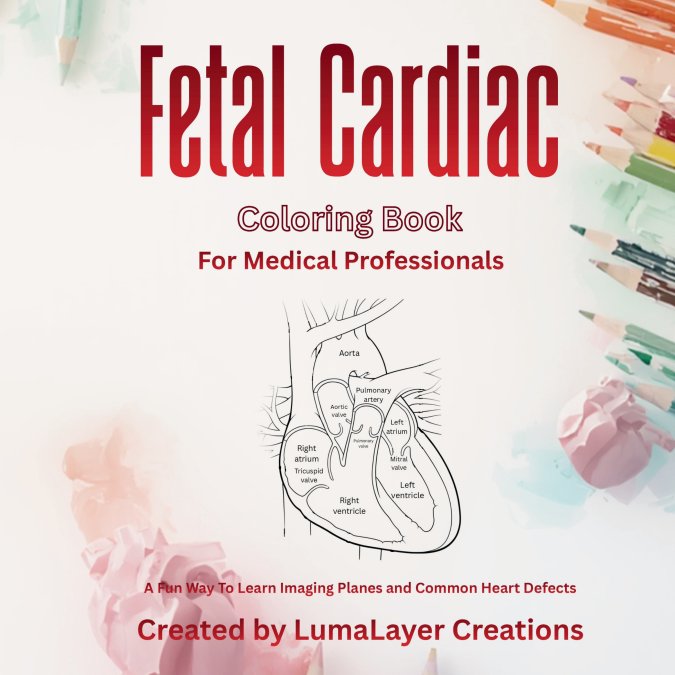
The best anatomy coloring books share traits such as accurate labeling and a range of detail levels, so they cover the systems you need. For a real medical-professional example to judge quality and structure, see our Fetal Cardiac Coloring Book For Medical Professionals.
Check these before you buy:
- Every structure is labeled, not just major organs
- Linework is fine enough for detail but not cramped
- Regions are grouped logically, system by system
- The book covers the systems your course actually tests
Bring Anatomy to Life with Custom Study Tools
Coloring works best when it sits alongside tools that make structure physical. That is where our studio comes in. LumaLayer Creations offers custom 3D printing for educators, producing anatomical models, and publishes independent books that blend science with imagination.
Browse our books to see the full range, or talk to us about a custom model for your course.
Frequently Asked Questions
Do anatomy coloring books help medical students learn?
Yes, they can. Coloring engages visual and motor pathways at the same time, which supports spatial recall of structures like muscle groups and nerve pathways. The key is using them as a supplement to lectures and dissection, not as a replacement for a full textbook or atlas.
Can coloring help with anatomy memorization?
Coloring supports memorization by pairing a structure’s name with its shape, location, and color. When you color the brachial plexus while reading about it, you create a visual and physical memory trace that plain reading does not. Use anatomy coloring book study tips like labeling from memory after coloring to strengthen recall further.
Are anatomy coloring books useful alongside textbooks?
They work best alongside textbooks. The anatomy coloring book vs anatomy textbook question is not either-or: a textbook gives you detailed descriptions and clinical context, while coloring pages give you spatial practice. A practical routine is to read a textbook section, then color the matching diagram, then quiz yourself on the structures without looking. This combination covers both verbal and visual learning, which is why many medical students keep both on their desk during exam prep.
What should medical students look for in an anatomy coloring book?
Look for accurate, clearly labeled diagrams that match the systems you are studying, single-sided pages so markers do not bleed through, and a range of detail levels from simple to complex. Check that labels use standard anatomical terminology and that the book covers the body systems in your course sequence. Pair it with your course syllabus to confirm the coverage matches.
Anatomy rewards students who engage with it actively, and coloring is one of the simplest ways to do that. If you want study tools built for real classroom use, LumaLayer Creations can help with custom 3D-printed anatomical models and original coloring books. Get started with LumaLayer Creations and give your students something they can hold, color, and remember.

0 Comments