
Last Updated: November 15, 2026
Quick Summary
Inclusive biology activities for diverse learners work best when every student has a way into the lesson through scientist profiles, data inquiry, and tangible models. A 2026 study found 94% of student responses showed no clear resistance to lessons featuring counter-stereotypical scientist role models. Adapt materials for sensory, mobility, language, and attention needs without lowering the standard.
- Pair a two-minute scientist profile with a small dataset so students reason rather than memorize.
- Require one claim backed by one number as the core evidence rule in every activity.
- Run the meiosis and nondisjunction investigation in 45 minutes with printed diagrams, beads, and an exit ticket.
- Assign rotating group roles like reader, recorder, data checker, and presenter so strengths surface.
- Score claim-evidence tickets 0 to 2 and track who speaks with a weekly group talk log.
Table of Contents
- Inclusive Biology Activities That Reach Every Learner
- Inclusive Biology Teaching Methods That Anchor Every Activity
- Biology Games for Students That Build Evidence-Based Reasoning
- Step-by-Step Activity Plans for Genetics, Meiosis, and Evolution
- Adapting Inclusive Biology Activities for Specific Learning Needs
- Assessment Tools That Measure Learning in Inclusive Biology Lessons
- Handling Sensitive Topics and Student Privacy in Classroom Discussion
- Building Your Inclusive Biology Toolkit With Tangible Models
- Frequently Asked Questions
Inclusive Biology Activities That Reach Every Learner
Inclusive biology activities for diverse learners start with one design choice: build the lesson so every student has a way in. A 2026 study in BioScience on student resistance to inclusive activities found that 94% of student responses showed no clear resistance to lessons featuring counter-stereotypical scientist role models. Here at LumaLayer Creations, we build tangible teaching tools for classrooms, and we have watched that same pattern play out: give students a real person, a real dataset, and something they can hold, and the lesson stops feeling abstract. Below, we break down what the research shows, then give you activity plans, adaptations, and assessment tools you can run this week.
What the 2026 Research Shows About Student Resistance
Teachers often worry that inclusive biology lessons will spark pushback. The evidence says otherwise.
The 2026 study integrated two established resources, Data Nuggets and Project Biodiversify. Students met a scientist profile, read about a study, explored a dataset, and built evidence-based answers. Researchers reported few instances of active resistance.
That does not mean resistance never happens. The study measured it directly rather than assuming it away. The takeaway for your classroom: prepare for questions, but do not design around fear.
A second mixed-methods study of 127 high school students examined students who completed two or more gender- and sexual-diversity-inclusive biology activities. Researchers designed four activities aligned with Next Generation Science Standards. Standards alignment matters, because it moves inclusive biology from an add-on to core instruction.
Inclusive Biology Teaching Methods That Anchor Every Activity
Three methods do most of the work in an inclusive biology classroom:
- Scientist profiles give students a real researcher to picture before the content arrives.
- Data inquiry puts students in the role of analyst, not note-taker.
- Tangible models turn structures they cannot see into objects they can pass around.
For a hands-on starting point, our guide on how to teach biology using artistic models walks through building models that make abstract concepts concrete for varied learners.
Scientist Profiles and Data Nuggets in Practice
A scientist profile is a short introduction to a working researcher: their background, their question, and why it matters. Pair it with a small dataset and students stop memorizing and start reasoning.
Run it in four moves:
- Read the profile aloud, two minutes.
- Show the research question on the board.
- Hand out the dataset in print or digital form.
- Ask for one claim backed by one number.
The claim-plus-number rule is where the learning happens. Students must cite scientific evidence, not opinion.
Universal Design for Learning in the Biology Classroom
Universal Design for Learning asks you to offer multiple routes to the same goal. In practice, that means:
- Representation: the same concept as text, image, and physical model.
- Action: students answer in writing, speech, or a labeled diagram.
- Engagement: choice between solo, pair, and group work.
Our overview of inclusive teaching strategies for anatomy education covers how to layer these options without doubling your prep time.
Biology Games for Students That Build Evidence-Based Reasoning
The best biology games for students reward evidence, not speed. A card sort where teams match a scientist to a study to a dataset teaches the same reasoning the standards demand, and it keeps hands busy while discussion happens.
Try a three-round format:
- Round one: match scientist profiles to research questions.
- Round two: match each question to a dataset.
- Round three: each team defends one match with a number.
Keep score for quality of evidence, not volume. Quiet students often win this version, and that is the point.
Step-by-Step Activity Plans for Genetics, Meiosis, and Evolution
Every plan below runs in one class period with low-cost materials. Print the datasets, gather models, and go.

Meiosis and Nondisjunction: A 45-Minute Investigation
Time: 45 minutes. Materials: printed chromosome diagrams, two colors of beads or clay, a nondisjunction dataset, exit ticket.
- Warm-up, 5 minutes: students sketch normal meiosis from memory.
- Model build, 15 minutes: pairs build chromosome pairs with beads and walk them through both divisions.
- Dataset, 15 minutes: groups read a nondisjunction dataset and mark where the error occurred.
- Discussion, 10 minutes: connect nondisjunction to real variation, including intersex traits, using neutral, factual language.
Watch out: skip the step where students build the error themselves. Groups start joking, and the lesson drifts. Label the error on the dataset instead.
Evolution and Sexual Selection Across Non-Human Organisms
Time: 40 minutes. Materials: species cards, trait dataset, whiteboard.
- Hook, 5 minutes: show three traits, ask which one wins mates.
- Sort, 10 minutes: teams rank traits by likely advantage across non-human organisms.
- Data check, 15 minutes: groups test their ranking against a real dataset.
- Reflect, 10 minutes: students write one sentence on where their prediction failed.
The failure reflection is the assessment. Predicting wrong and correcting with data is the skill.
Adapting Inclusive Biology Activities for Specific Learning Needs
Adaptation is not a separate lesson plan. It is a set of small changes made before class, organized by the kind of need the student has. The categories below cover most of what you will see in a diverse classroom.
Sensory needs. For students with low vision, print datasets in large type and pair every diagram with a verbal description. For students with hearing loss, face the class when speaking and provide the scientist profile in text so nothing depends on audio alone. For students sensitive to noise, designate a quiet corner for the dataset step and let pairs work there.
Mobility needs. Pre-build model parts for students who need them, and place materials within reach rather than at a central supply table. If the activity requires moving between stations, offer a seated version where the stations come to the student on a tray.
Language needs. Shorten scientist profiles to the essential question and finding. Add a glossary strip with five to seven key terms. Give sentence frames such as “The data shows ___ because ___.” Pair students who are still building English proficiency with a partner who can model the reasoning, not just translate it.
Cognitive and attention needs. Break the 45-minute investigation into labeled chunks with a visible timer. Offer a checklist so students can see what comes next. Reduce the dataset to the three rows that carry the reasoning rather than the full table.
For students with varied preparation, assign roles inside each group: reader, recorder, data checker, presenter. Rotate roles weekly so no student is stuck in one lane. A student who struggles to read the dataset may be the strongest data checker, and the role structure lets that strength surface.
Watch out: adapting the task is not the same as lowering the standard. The student still makes a claim backed by a number; the route to that claim is what changes.
Assessment Tools That Measure Learning in Inclusive Biology Lessons
Measure reasoning, not recall. Three tools cover most needs:
|
Tool |
What It Measures |
When to Use |
|---|---|---|
|
Claim-evidence ticket |
Evidence-based reasoning |
End of every activity |
|
Model explanation |
Structure and function |
After model builds |
|
Group talk log |
Inclusive discussion |
Weekly |
A claim-evidence ticket takes two minutes. Students write one claim and one supporting number from the dataset. Score it 0 to 2: no evidence, weak evidence, clear evidence.
The group talk log is a simple tally of who speaks during discussion. If three voices dominate, change the format, not the students.
Handling Sensitive Topics and Student Privacy in Classroom Discussion
Set ground rules before the content, not after. Announce that questions are welcome, that no one speaks for a group, and that personal stories stay personal.
Then protect privacy in small ways:
- Use anonymous response cards for sensitive questions.
- Never ask students to disclose identity or family details.
- Redirect personal questions to the science.
Inclusive discussions work when the teacher holds the frame. You are teaching biology, and the biology of gender and sexuality belongs in the curriculum. You are not asking anyone to explain themselves.
Building Your Inclusive Biology Toolkit With Tangible Models
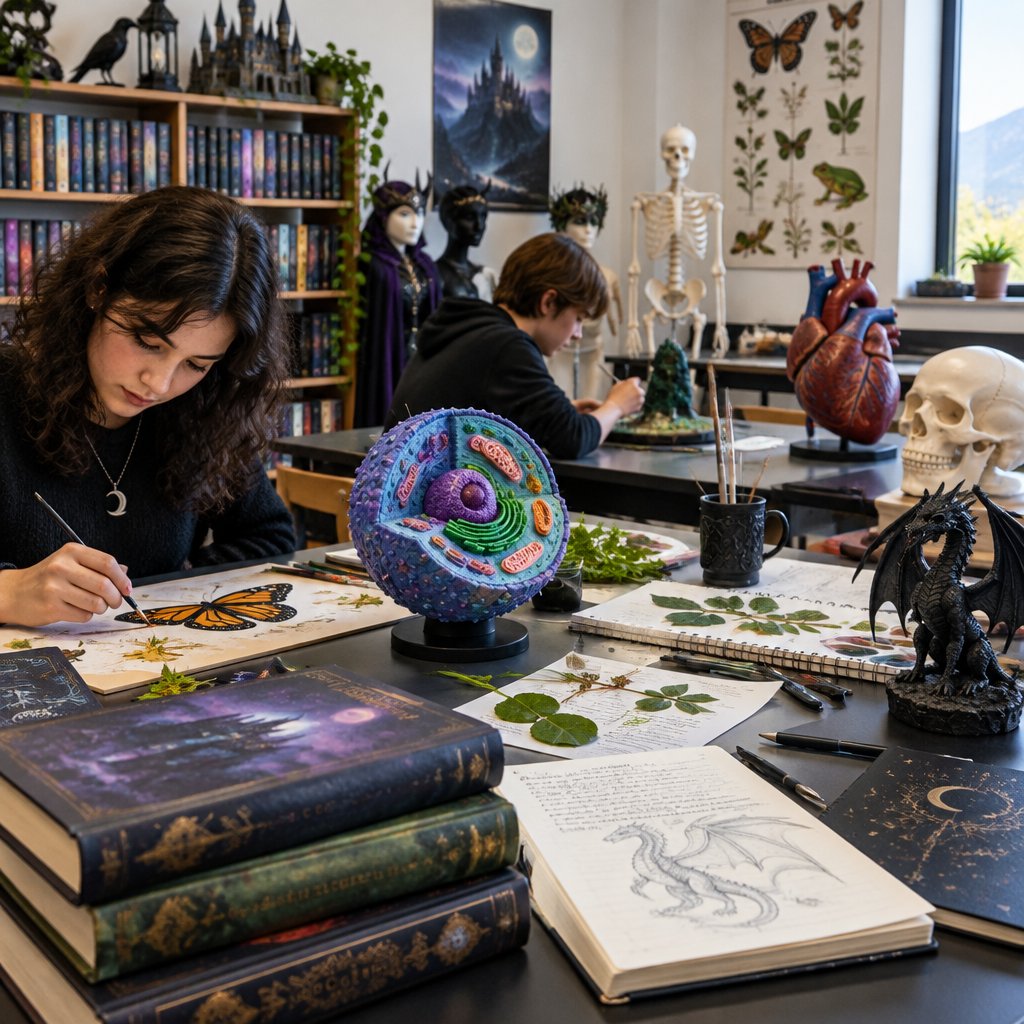
Tangible models close the gap between a diagram and understanding. Some students find physical structures easier to understand than flat images.
Our anatomy teaching tools for educators guide covers what to look for in classroom-ready models. If you are weighing materials, our comparison of why 3D printed models are better breaks down durability and detail. And when you are ready to order, our guide on buying custom 3D printed anatomy models explains the process from design to delivery.
LumaLayer Creations makes custom 3D-printed anatomical models for classrooms and clinics, and our 3D printing service can produce custom anatomical models for classrooms. Teachers can ask about bulk orders directly, since pricing depends on the models and quantity you need.
Building inclusive biology activities takes planning, but the research is on your side: students respond to inclusive lessons with far less resistance than teachers expect. LumaLayer Creations creates custom 3D-printed anatomical models and original printed designs that make complex biological structures tangible for classrooms, with custom 3D-printed models for classrooms. Get started with LumaLayer Creations and give every student something real to hold.
Frequently Asked Questions
What are some examples of diversity activities for students in biology?
Start with scientist profiles paired with real datasets. In the 2026 BioScience study, students met a counter-stereotypical scientist, read about that scientist’s research, explored and visualized the dataset, then wrote an evidence-based response. Add a short reflection prompt asking students which identities and backgrounds they noticed in the science. Project Biodiversify lists additional resources covering sex and gender, race and ethnicity, ability, data literacy, and active learning, so you can rotate profiles across a unit rather than saving them for one diversity lesson.
How can teachers make biology activities more inclusive for diverse learners?
Use inclusive biology teaching methods that build in options from the start: offer the dataset as a printed table, a graph, or a narrated walkthrough; let students respond in writing, verbally, or with a labeled diagram; and keep group roles explicit so quieter students have a defined part. The 2026 CBE—Life Sciences Education study designed four activities aligned with Next Generation Science Standards and found that 127 high school students who completed two or more activities could engage without the lesson becoming about any single student’s identity. Pre-teach vocabulary like intersex traits and nondisjunction so the science, not the terminology, is the challenge.
What are some fun games for biology students that still teach real content?
Try a meiosis card sort where teams arrange chromosome cards through each phase and flag where nondisjunction could occur, or a scientist-profile guessing game where students match a research question to the scientist who studied it. A data relay works well for evolution: each group gets one graph from a scientific study and must state a claim, evidence, and reasoning before passing it on. Keep rounds to five to seven minutes and post the correct reasoning after each round so the game reinforces evidence-based reasoning rather than speed alone.
How can biology lessons support students with different learning needs and varied preparation?
Differentiate the entry point, not the objective. Give students who need more support a partially completed data table or a word bank with terms like genetics, reproduction, and evolution; give students ready for more a second dataset to compare. For accessibility, provide large-print handouts, captioned videos, and models students can handle. Tangible models give students who learn by touch something to examine alongside diagrams.

0 Comments