

Table of Contents
- Why Artistic Models Belong in the Biology Classroom
- Getting Started: Materials, Setup, and a Simple First Lesson
- Biology Model Project Ideas That Fit Any Grade Level
- The Biology Storyboarding Activity: Sequencing Life Processes
- Art-Based Biology Activities for Visual and Kinesthetic Learners
- Choosing an Anatomy Model for Teaching: Physical vs. Digital
- Assessing Artistic Models: Rubrics and Misconception Checks
- Inclusive Adaptations for Every Learner
- Frequently Asked Questions
Last Updated: October 22, 2026
Why Artistic Models Belong in the Biology Classroom
Artistic models turn abstract biology into something students can see, touch, and argue about. A cell is invisible; a clay mitochondrion is not.
Standalone giant saber tooth cat skull cat bed
The key insight most guides skip: the model itself is not the lesson, the thinking students do while building it is.
That decision-making is model-based learning: students build a visual representation, compare it to the real thing, and name its limits.
From Pencil and Paper to Three Dimensions
Drawing-based modeling is the cheapest entry point, but flat drawings hide spatial relationships: a 2D cell diagram cannot show that the nucleus sits off-center or that the membrane curves.
Three-dimensional work fixes that. Clay, foam, cardboard, and 3D-printed parts all force students to solve spatial problems. The Next Generation Science Standards emphasize exactly this kind of modeling practice across grade levels.
So start flat, then go 3D.
Getting Started: Materials, Setup, and a Simple First Lesson
You do not need a big budget. A workable model kit fits in a shoebox:
- Clay or modeling dough in 4-5 colors
- Pipe cleaners and craft sticks
- Cardboard scraps and foam sheets
Set up one supply station per table group. Cover desks with paper. Give each group a “model tray” so cleanup takes two minutes, not twenty.
A 20-Minute Cell Model Warm-Up
This works from third grade up. Adjust the vocabulary, not the structure.
- Draw first (5 minutes). Each student sketches a plant or animal cell from memory. No textbook open.
- Build second (10 minutes). Students shape the same cell in clay, one color per organelle.
- Compare third (5 minutes). Pairs trade models and list two things their partner’s model shows that a drawing could not.
Expected result: Students will notice that organelles need space, that the membrane has thickness, and that their memory sketch was missing structures, formative assessment gold.
Biology Model Project Ideas That Fit Any Grade Level
The best biology model project ideas scale by grade without changing the core task: build, compare, critique. The table below adds materials per student, prep time, rough cost, the learning objective, and the misconception each activity surfaces.
|
Grade Band |
Project |
Materials per Student |
Prep Time |
Rough Cost per Class |
Learning Goal |
Misconception Targeted |
|---|---|---|---|---|---|---|
|
K-2 |
Clay cell with 3 parts |
1 oz dough in 3 colors, paper plate, marker |
10 min |
Under $10 |
Name membrane, nucleus, cytoplasm |
“The cell is empty inside” |
|
3-5 |
Pipe-cleaner DNA ladder |
4 pipe cleaners, 20 beads, tape |
15 min |
Under $15 |
Base-pairing pattern (A-T, C-G) |
“DNA is a single strand” |
|
6-8 |
Foam organ system |
3 foam sheets, 12 pins, labels |
30 min |
Under $25 |
System relationships and sequence |
“Organs work alone” |
|
9-12 |
Scale model of a structure |
Cardboard, ruler, printed reference |
45 min |
Under $20 |
Scale, proportion, function |
“Bigger always means more important” |
Costs assume a class of 30 and reusable tools; consumables are the only recurring expense. Prep time is teacher time before the period, not student time.
Elementary: Clay Cells and Pipe-Cleaner DNA
Young students need fewer parts and more color. A clay cell with three labeled parts beats a fifteen-part model every time.
For DNA, twist two pipe cleaners together and add colored beads as base pairs, one color for A-T and another for C-G.
Assessment for this band: Can the student point to and name each part? Can they explain in one sentence why the nucleus is a different color?
Middle and High School: Systems, Structures, and Scale
Older students can handle relationships, not just names. Ask them to build two connected organs and explain the connection in a 60-second oral defense.
A workable middle-school sequence over two class periods:
- Day 1 (30 min): Pairs sketch the organ system from memory, then build a foam version with pins for joints.
- Day 1 wrap (10 min): Each pair writes one limitation of their model on an index card.
- Day 2 (20 min): Pairs swap models, run a critique circle, and revise one part.
- Day 2 close (15 min): Oral defense of the connection between the two organs.
For high school scale work, require a written ratio and one sentence on why the real structure’s size matters to its function.
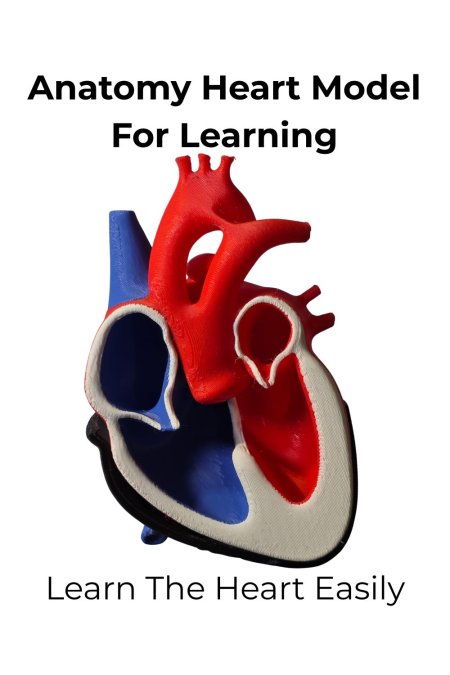
This is where a precise anatomy model for teaching earns its place. Hand-built models teach process. A durable printed model teaches accurate structure.
Quick Selection Guide
- Short on time? Run the 20-minute cell warm-up.
- Low budget? Paper, pencil, and pipe cleaners cover grades K-5 for under $15 per class.
- Need a unit capstone? Use the 9-12 scale model with a written ratio and oral defense.
The Biology Storyboarding Activity: Sequencing Life Processes
A biology storyboarding activity asks students to draw a process as a sequence of frames, like a comic strip: mitosis becomes six panels, photosynthesis four, cellular respiration a flow of inputs and outputs.
The rules are simple:
- One idea per frame
- Arrows must show direction
- Every frame needs a one-line caption
Storyboards expose gaps fast. A student who cannot draw frame three does not understand step three. That is a diagnostic tool, not a failure.
Teachers can extend this into simple animation using PowerPoint or a free stop-motion app.
Art-Based Biology Activities for Visual and Kinesthetic Learners
Art-based biology activities give visual and kinesthetic learners a route into content that usually arrives as text. The evidence for arts integration in STEM is strong enough that it belongs in your weekly plan, not just as a Friday treat.
Try these:
- Analogies first. Ask students to finish “A cell membrane is like…” before they build anything. Analogies give the model a job.
- Color coding. Assign one color per organelle across the whole unit. Consistency builds recall.
- Model critique circles. Groups swap models and list one strength and one limitation. This builds scientific accuracy habits.
The National Art Education Association documents how arts integration supports engagement across subject areas, and biology is no exception.
Choosing an Anatomy Model for Teaching: Physical vs. Digital
Physical and digital models do different jobs, so pick by learning goal, not novelty. The table below adds the criteria that actually decide the choice: prep time, storage, accessibility, and what each medium is worst at.
|
Criterion |
Physical Model |
Digital Model |
|---|---|---|
|
Hands-on handling |
Strong; supports tactile and kinesthetic learners |
None; relies on screen interaction |
|
Setup and cleanup |
10-20 min per class; needs covered desks and trays |
Under 5 min; needs devices charged and logged in |
|
Storage |
Needs shelf or bin space; fragile parts break |
No physical storage; file management instead |
|
Cost pattern |
One-time purchase per model; consumables for builds |
Device or software access; often per-seat licensing |
|
Durability |
Depends on material; foam dents, printed parts survive handling |
Unlimited copies; no wear |
|
Best for |
Critique circles, oral defense, spatial reasoning |
Labeling drills, zooming into scale, repeat practice |
|
Accessibility |
Needs space and fine motor control unless adapted |
Zoom, screen reader, and caption options built in |
|
Worst at |
Precise labeling at small scale |
Building intuition for weight, texture, and thickness |
A Decision Guide by Learning Goal
Use this sequence to choose the medium before you plan the lesson:
- Goal is naming and labeling? Go digital. Repeatable drills and zoom beat a single physical model passed around a room.
- Goal is spatial reasoning and relationships? Go physical. Students need to feel that the nucleus takes up space and that the membrane has thickness.
- Goal is scale and proportion? Use both. Build a rough physical model, then compare it to a digital reference with a zoom tool.
- Goal is critique and misconception surfacing? Go physical. A model students can point to and rotate produces better critique conversations than a screen.
- Goal is accessibility for mixed abilities? Default to digital for labeling tasks and offer a tactile physical alternative for students who need it.
Hybrid Approach That Works
A common pattern is to build physically, then photograph the model and label it digitally. Students get the tactile reasoning of construction and the precision of a labeling tool. The photo also becomes a record you can revisit before a unit test.
When students pass models around, durability matters most. Printed anatomical models built for handling survive repeated use better than foam or clay, which is why many teachers keep a small set of durable reference models and let students build the reasoning models themselves.
Assessing Artistic Models: Rubrics and Misconception Checks
Grade the thinking, not the glue. A four-part rubric keeps scoring fair and fast:
- Accuracy: Structures are correctly shaped, placed, and proportioned
- Completeness: All required parts are present and labeled
- Reasoning: Student can explain what the model shows and what it leaves out
Add one misconception check per project. Ask: “Point to the part your model gets wrong.” Students who can name a limitation understand the science. Students who cannot are still copying.
Inclusive Adaptations for Every Learner
Every model activity needs a second version. Build in these adaptations from the start:
- Offer pre-cut pieces for students with fine motor challenges
- Allow digital drawing or a slide-based model instead of clay
- Provide a labeled reference sheet for students who need vocabulary support
None of these lower the bar. They change the route. A student who explains a model out loud is still demonstrating conceptual understanding.
The CAST Universal Design for Learning guidelines frame this well: offer multiple means of representation, action, and engagement.
Biology teachers face a real squeeze: too much content, too little time, and students who tune out at the word “organelle.” Artistic models solve that squeeze because they make complex structures tangible and give every learner a way in.
Frequently Asked Questions
How can art be used to teach biology without losing scientific accuracy?
Art becomes a teaching tool when accuracy is built into the assignment, not added afterward. Give students a checklist of structures the artistic model must include, such as the nucleus, mitochondria, and cell membrane, and have them label each part. Ask them to note one thing their model simplifies or leaves out. That short reflection turns a craft project into a lesson on model limitations, which is a core part of scientific knowledge. Teachers who review models against the checklist catch misconceptions early, before they harden into exam answers.
What are some easy biology model project ideas for a tight classroom budget?
Paper, cardboard, clay, pipe cleaners, and recycled containers cover most biology model project ideas. A cell model can be built from a shoebox and modeling clay. DNA can be represented with pipe cleaners and beads. A lung model can use a plastic bottle and balloons. Total material cost per student often stays under $5 when supplies are bought in bulk. Preparation time runs 10 to 15 minutes for setup. These low-cost options keep hands-on learning accessible to every student, not just those who can afford elaborate kits.
How do teachers assess biology projects that include art?
Use a rubric with three or four criteria: scientific accuracy, completeness of labeled structures, clarity of visual representation, and quality of the written reflection. Score each on a simple scale and share the rubric before students start building. Pair the rubric with a short misconception check, such as asking students to explain one structure’s function in their own words. This approach gives you a diagnostic tool for conceptual understanding while still honoring the creative work students put into their models.
Can artistic models help students understand anatomy better than textbooks alone?
Artistic models give students a spatial, hands-on way to see how structures fit together, which textbooks struggle to convey in two dimensions. Building or handling an anatomy model for teaching, whether a clay sculpture or a 3D-printed piece, lets students rotate it, compare sizes, and trace connections between muscles, bones, and organelles. Combine the model with a short reading or diagram so students connect the physical form to the terminology. The model becomes a reference point they can return to during discussion and review.
0 Comments