

Table of Contents
- Why Custom Cosplay Armor Needs a Written Replacement Policy
- What to Include in a Cosplay Commission Contract Template
- How to Handle Damaged Cosplay Props: A Step-by-Step Process
- Cosplay Armor Shipping Insurance: Protecting Your Investment
- Replacement, Repair Kits, and Warranty Periods for Custom Armor
- Dispute Resolution and Standardized Policy Templates for Makers
- Frequently Asked Questions
Last Updated: September 28, 2026
Why Custom Cosplay Armor Needs a Written Replacement Policy
A custom cosplay armor replacement policy is a written promise spelling out what happens when a piece arrives cracked, fits wrong, or fails at a convention. It protects both maker and buyer.
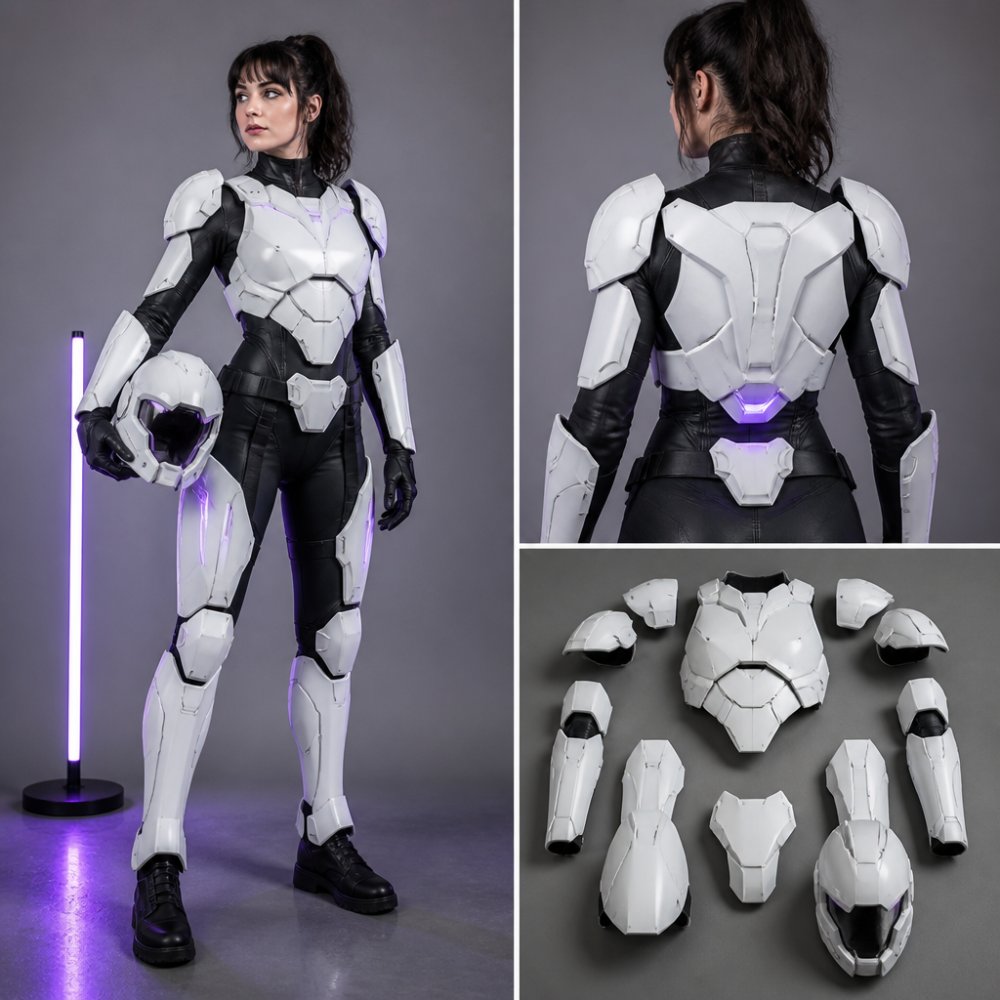
Custom armor is handmade, one of a kind, and often expensive. Buyers worry about fitment issues and flimsy parts; makers worry about buyers who damage a piece and demand a free redo. A clear policy solves both problems.
This guide walks through building that policy from scratch, with exact clauses, a damage process, and a copyable template.
What to Include in a Cosplay Commission Contract Template
A cosplay commission contract template should cover five things: design, timeline, payment schedule, replacement terms, and dispute process. Skip one and you leave room for a fight.
Most makers start with a message thread. That works until something goes wrong; a real template sets expectations before money changes hands.
Every template needs these sections:
- Project scope and reference images
- Material list (TPU filament, leather tooling, resin, and so on)
- Measurement instructions and deadlines
- Deposit and final payment terms
- Production lead time and queue position
- Replacement and refund policy
- Return authorization steps
Write it in plain language. A buyer should not need a lawyer to read it.
A Fill-in-the-Blank Replacement Policy Template
Most makers never write a replacement policy because they don’t know where to start. Copy the block below, replace the bracketed fields, and you have a working policy.
Replacement Policy for [Studio Name]
Effective date: [Date]. This policy applies to every custom commission unless a signed quote states otherwise.
1. What is covered. We replace or repair any piece that fails from a manufacturing defect, a material defect, or a build error on our side. Covered examples: a seam that splits on first wear, a plate that delaminates without impact, a strap anchor that pulls out under normal use.
2. What is not covered. We do not cover damage from accidents, drops, misuse, modifications by anyone other than us, or normal cosmetic wear such as scuffs, paint rub, or minor surface scratches. See the wear-and-tear boundary below.
3. Reporting window. Report a defect within [30] days of delivery.
Key Clauses: Measurement Accuracy, Material Durability, and Fitment Issues
Measurement accuracy is the biggest source of fitment issues. Wrong numbers mean the armor won’t fit, and someone has to pay for the fix.
For fitment issues, define who covers what:
- Maker error (wrong size built): remake at no cost
- Buyer error (wrong measurements given): remake at a set fee
- Normal settling or minor gaps: adjustment guidance, not a remake
How to Handle Damaged Cosplay Props: A Step-by-Step Process
Handling damaged cosplay props starts with documentation, not blame. The first hour matters most, because evidence disappears fast.
Follow this process every time:
- Stop and photograph everything. Shoot the damage, the packaging, and the shipping label before you move anything.
- Do not repair it yourself. Gluing a crack can void your claim. Leave it as-is.
- Contact the maker within 48 hours. Most policies set a short window for reporting.
- Send the photos and your order number. This starts the return authorization.
- Wait for instructions. The maker decides: repair, replacement, or refund.
- Ship it back in original packaging if asked, and keep the tracking number.
Documenting Shipping Damage and Requesting Return Authorization
Documenting shipping damage means capturing the box condition, inner padding, and broken part in one set of photos. Timestamped images carry more weight than a written description.
Ask buyers to include:
- Order number and date
- Photos of damage from three angles
- A short written description
- The shipping carrier and tracking number
Cosplay Armor Shipping Insurance: Protecting Your Investment
Cosplay armor shipping insurance covers loss or damage in transit. For a bespoke costume, it’s the cheapest protection you can buy.
A few habits cut risk fast:
- Double-box rigid armor with foam between layers
- Photograph the packed box before sealing
- Keep receipts for the declared value
- File claims within the carrier’s deadline
Replacement, Repair Kits, and Warranty Periods for Custom Armor
A warranty period is the window during which a maker fixes defects for free. A repair kit is a small set of parts and tools shipped so the buyer can fix minor issues at home.
- Spare straps and buckles
- A tube of flexible adhesive
- Touch-up paint matched to the finish
- A short printed guide
Warranty coverage typically includes:
- Manufacturing error
- Defects in materials
- Failed seams or joints
|
Problem |
Likely Cause |
Fix |
Who Pays |
|---|---|---|---|
|
Wrong size built |
Maker error |
Full remake |
Maker |
|
Wrong size ordered |
Buyer error |
Paid remake |
Buyer |
|
Crack in normal use |
Possible defect |
Repair or replace |
Maker |
|
Crack after a fall |
Wear-and-tear |
Repair kit or paid fix |
Buyer |
|
Crushed in transit |
Shipping damage |
Insurance claim |
Carrier |
Wear-and-Tear vs. Defect: Where to Draw the Line
A defect is a flaw present from the start that shows up under normal use. Wear-and-tear is damage from accidents, misuse, or time.
- Paint rub at contact points (shoulder straps, hip plates): wear-and-tear.
- Delamination between printed layers with no impact: defect.
- Crack radiating from a screw hole the maker drilled: defect.
- Crack radiating from a point of impact: wear-and-tear.
- Loose buckle after normal fastening: defect.
- Buckle snapped during a fall: wear-and-tear.
Documenting a Claim and Escalating a Dispute
A defect claim only works if the buyer documents it the same way every time. Ask for a fixed set of evidence so you can compare claims fairly:
- Order number and delivery date. This anchors the warranty window.
- Three photos. One wide shot of the whole piece, one close-up of the failure, one shot of the area around it for context.
- A one-line description. “Seam at left shoulder split after second wear” beats a paragraph of frustration.
- A short video if the failure is mechanical. A strap that pulls loose is easier to judge in motion than in a still.
- Direct talk. Both sides discuss within seven days of the decision.
- Written review. Each side submits photos, notes, and the original contract clause at issue.
- Neutral mediation. A third party reviews the file and suggests a fix. The Better Business Bureau guidance on handling complaints is a common neutral option when a direct talk stalls.
Dispute Resolution and Standardized Policy Templates for Makers
Dispute resolution is the process for settling a disagreement when the normal policy doesn’t cover it. A standardized template gives every customer the same terms, removing any hint of favoritism.
A simple three-step process works well:
- Direct talk. Buyer and maker discuss within seven days.
- Written review. Both sides submit photos and notes.
- Neutral mediation. A third party reviews and suggests a fix.
Frequently Asked Questions
Are custom cosplay commissions refundable?
Refund eligibility depends on the stage of production. Most independent studios offer full refunds before materials are ordered, partial refunds during production, and no refunds after shipping. A clear custom cosplay armor replacement policy should state these milestones in writing. If the finished piece has a manufacturing error or fitment issue caused by the maker, a repair or replacement is standard. If the buyer provided incorrect measurements, refunds are typically not offered, though re-printing at cost may be possible.
What should be included in a custom armor commission contract?
A solid cosplay commission contract template covers measurement accuracy, material durability expectations, warranty period, refund policy, replacement terms, production lead time, and shipping insurance responsibilities. Include reference photos, agreed-upon sizing in inches or centimeters, and a clause for wear-and-tear versus defect. Both parties should sign before any deposit is paid. This protects the maker from disputes and gives the buyer clear recourse if a custom cosplay armor piece arrives damaged or does not match the agreed design.
How do I handle damaged custom cosplay armor upon arrival?
Photograph the box and the damaged piece before removing any packaging. Contact the maker within 48 hours with your order number and photos. Most policies require a return authorization before any repair or re-printing. If the damage occurred in transit, file a claim with the shipping carrier using the cosplay armor shipping insurance you purchased. Do not attempt repairs yourself, as this can void the warranty. Keep all original packaging until the claim is resolved.
Do most independent cosplay artists offer replacement policies?
Policies vary widely. Some makers offer a 30-day warranty covering manufacturing errors and structural integrity failures, while others handle replacements case by case. A growing number of studios now publish standardized policy templates that spell out replacement terms, repair kit options, and dispute resolution steps. Before commissioning, ask for the policy in writing. If a maker cannot provide one, that is a signal to clarify expectations upfront or look for a studio that offers a clear quality guarantee.
Custom armor can crack, arrive damaged, or fit wrong. The difference between a smooth fix and a messy fight comes down to one thing: a written policy. At LumaLayer Creations, we build original 3D-printed designs and cosplay accessories with the same care we put into clear terms. Our custom 3D-printed pieces and gothic accessories come from a real studio that stands behind its work. Explore our Shop to see how we blend science, fantasy, and curiosity into every piece.
0 Comments