

Table of Contents
- Why Coloring Books Belong in Every Learning Space
- How Coloring Books for Kids Build Cognitive Skills
- Anatomical Coloring Books for Adults: Where Art Meets Biology
- Botanical Illustration Coloring Books: Cultivating Plant Knowledge Through Art
- Wildlife, Ecology, and Habitat Exploration on the Page
- Printable PDF vs. Physical Books: Choosing the Right Format
- Integrating Nature Science Coloring Books Into Your Curriculum
- Conclusion
- Frequently Asked Questions
Last Updated: September 27, 2026
Why Coloring Books Belong in Every Learning Space
Coloring books are illustrated activity books that pair accurate wildlife, plant, and science drawings with coloring prompts, turning art time into hands-on science study. At LumaLayer Creations, we publish these books alongside our cottagecore reptile coloring titles, and we have watched them earn a permanent spot on shelves in classrooms and living rooms alike.
The reason is simple. A blank worksheet asks a person to memorize. A detailed line drawing of a heart asks them to look, notice, and remember.
Coloring also builds the hand strength and pencil control that later support writing and lab work. Many teachers find that pairing a coloring page with a short reading passage keeps students engaged longer than either activity alone.
Below, we break down how these books support cognitive growth, how to match them to your age, and how to fold them into a real curriculum.
How Coloring Books for Kids Build Cognitive Skills
The strongest cognitive benefit of these books is observational learning: individuals practice sustained attention while comparing a drawing to a real specimen or photograph. That comparison habit is the foundation of scientific literacy.
A common mistake is treating coloring as busywork. In practice, the best pages ask a question. A dragonfly diagram that labels wing veins teaches more than a generic butterfly outline, because the colorist has to slow down and match parts to names.
Most guides stop at “coloring builds fine motor skills.” That is true but incomplete. The real value is that different pages train different cognitive systems, and the page you choose should match the skill you want to grow. Here is how the major skill categories map to age and page type:
|
Cognitive Skill |
What It Trains |
Best Page Type |
Age Window |
|---|---|---|---|
|
Fine motor control |
Grip strength, wrist stability, pencil pressure |
Large, simple outlines with thick borders |
3-5 |
|
Observational accuracy |
Comparing drawn features to real specimens |
Labeled diagrams with distinct parts (wing veins, leaf margins) |
6-8 |
|
Visual-spatial reasoning |
Mentally rotating and assembling structures |
Cross-section pages (flower parts, insect anatomy) |
7-10 |
|
Taxonomic thinking |
Sorting by shared traits, naming categories |
Pages grouped by family (beetles, ferns, raptors) |
9-12 |
|
Systems thinking |
Connecting parts to whole ecosystems |
Habitat scenes with food webs and life cycles |
10-13 |
Watch for these developmental markers as you work:
- Ages 3-5: fills large shapes, names colors, copies simple patterns
- Ages 6-8: stays inside lines, notices small details, asks “what is this?”
- Ages 9-12: adds shading, reads labels, connects pages to outdoor sightings
A practical way to use the table: pick the skill first, then the page. If you rush and color a beetle without looking at the legs, the issue is not effort, it is that the page is not forcing observational comparison. Swap in a labeled diagram with a matching photo and the behavior usually changes within one session.
Anatomical Coloring Books for Adults: Where Art Meets Biology
Anatomical coloring books for adults are detailed line drawings of bones, muscles, organs, and body systems designed for older learners who want to study structure while they color. Medical students, nursing students, and curious hobbyists use them to reinforce terminology.
The difference from a children’s book is precision. Good anatomy pages label structures consistently and group them by system, so the coloring session doubles as a review session. Instructors often pair these pages with a physical model for a stronger spatial understanding.
If you teach, look for books that separate skeletal, muscular, and organ systems into distinct sections. That structure makes it easy to assign one system per week.
Botanical Illustration Coloring Books: Cultivating Plant Knowledge Through Art
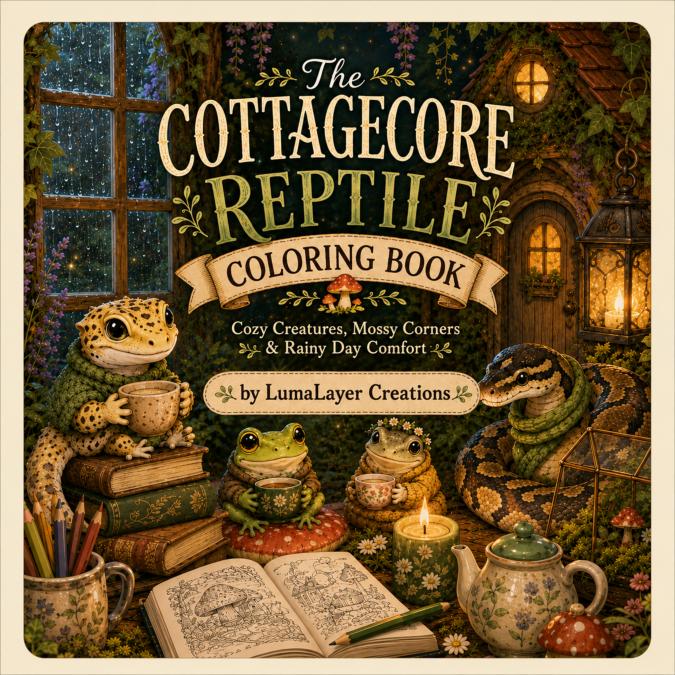
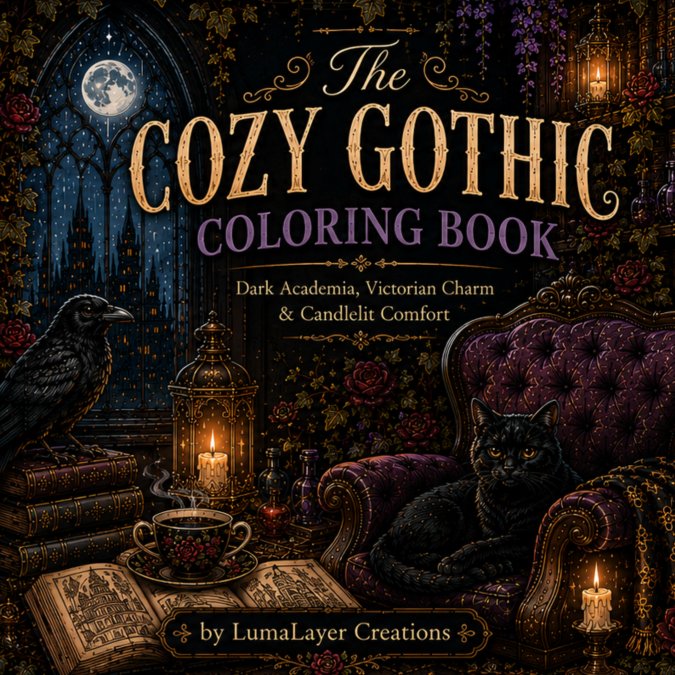
Botanical illustration coloring books focus on plant form: leaf shape, flower structure, root systems, and seed pods. They teach plant identification the same way a field guide does, but the coloring step forces closer attention to detail. LumaLayer Creations offers The Cottagecore Reptile Coloring Book and The Cozy Gothic Coloring Book, which blend botanical and other themes.
Botanical accuracy matters here. A page that draws a leaf with the wrong vein pattern teaches the wrong thing.
Wildlife, Ecology, and Habitat Exploration on the Page
Wildlife and ecology coloring pages connect individual animals to the places they live. A strong page shows the animal, its food source, and its habitat in one scene, which introduces food webs without a lecture.
Printable PDF vs. Physical Books: Choosing the Right Format
Printable PDF coloring books offer instant access and unlimited reprints, while physical books offer a screen-free experience and a finished keepsake. The right choice depends on how you plan to use the pages.
|
Format |
Best For |
Trade-off |
|---|---|---|
|
Printable PDF |
Classrooms, repeated practice, tight budgets |
Requires a printer and paper |
|
Physical book |
Gifts, travel, screen-free routines |
Single copy, harder to reprint |
|
Spiral-bound |
Art students, heavy daily use |
Less portable than a stapled book |
Integrating Nature Science Coloring Books Into Your Curriculum
Curriculum alignment is where these books earn their keep. Map each coloring page to a science standard you already teach, and the book stops being a reward activity and becomes a lesson component.
A simple weekly structure works well:
- Monday: read a short passage on the week’s topic
- Tuesday: color the matching diagram and label the parts
- Wednesday: observe the real thing outdoors or in a video
- Thursday: draw a freehand version from memory
- Friday: discuss what changed between the colored page and the memory drawing
Aligning Pages to Standards and Curricula
The Next Generation Science Standards (NGSS) organize elementary science around three dimensions: disciplinary core ideas, science and engineering practices, and crosscutting concepts. Nature science coloring pages fit all three if you choose them deliberately.
- Disciplinary core ideas: a page on a local bird matches the life sciences standard on interdependent relationships in ecosystems.
- Science and engineering practices: labeling a diagram and comparing it to a real specimen is the practice of “developing and using models.”
- Crosscutting concepts: a habitat scene showing predator, prey, and plant is a “systems and system models” page.
A simple alignment log keeps this manageable:
|
Unit Topic |
Matching Page Type |
Standard Dimension |
|---|---|---|
|
Ecosystems |
Habitat scene with food web |
Core idea + systems |
|
Classification |
Family-grouped species pages |
Core idea + practices |
|
Plant structure |
Labeled leaf and flower diagrams |
Core idea + practices |
|
Earth science |
Rock cycle and crystal pages |
Core idea + models |
|
Human body (older) |
System-by-system anatomy pages |
Core idea + systems |
A Note on Materials and Sustainability
Those who care about nature science often care about the materials behind it. Two practical checks before you buy:
- Paper sourcing: look for books that state recycled content or Forest Stewardship Council (FSC) certification on the copyright page. Uncoated, heavier-weight paper also takes colored pencil better and bleeds less with markers.
- Coloring tools: water-based markers and colored pencils labeled non-toxic (look for the AP seal from the Art & Creative Materials Institute) are a safer default.
Conclusion
Matching a coloring book to your age and your learning goals takes a little planning, but the payoff shows up in sharper observation and stronger vocabulary. LumaLayer Creations publishes cottagecore reptile coloring books and other science-inspired titles designed to make biology tangible, alongside custom 3D-printed anatomical models for classrooms. Explore our shop to find a title that fits your next unit, and pair it with a model for a lesson you remember.
Frequently Asked Questions
Are there science-based coloring books designed for adults?
Yes. Anatomical coloring books for adults and botanical illustration coloring books are two popular categories. These books feature intricate line drawings of human anatomy, plant structures, and cellular diagrams. Adults use them for stress relief, hobby enrichment, and as supplemental study tools for biology, nursing, and botany courses. The detailed patterns and taxonomic accuracy make them engaging for anyone who enjoys science-based art.
How do botanical coloring books help with learning plant anatomy?
Botanical illustration coloring books require you to color specific plant parts like petals, stamens, leaves, and root systems. This hands-on learning reinforces observational learning and visual memory. When you color a labeled diagram of a flower, you engage fine motor skills while memorizing structure names. Many books include taxonomic notes and habitat information, turning each page into a mini lesson on biodiversity and ecology.
Can coloring books be used as a tool for scientific study?
They work well as supplemental materials. Coloring forces you to slow down and notice details in diagrams, which supports scientific literacy. For anatomy students, coloring muscles, bones, and organs reinforces spatial relationships. Pair coloring with outdoor exploration or curriculum support for the strongest results.
What makes LumaLayer Creations’ approach to nature art unique?
LumaLayer Creations blends science, fantasy, and curiosity in independently published books. Their cottagecore reptile coloring books and custom anatomical models make complex biological structures tangible. The studio focuses on original line drawings with botanical accuracy and taxonomic detail. For adults, they offer anatomical and botanical themes. Pricing depends on format and quantity, so check their website for current options.
0 Comments