

Table of Contents
- Why Custom Gothic Cosplay Accessories Make Your Convention Look
- 3D-Printed Cosplay Props: Durability and Design on the Convention Floor
- Gothic Jewelry for Cosplay: Chokers, Pendants, and Statement Pieces That Last
- DIY Gothic Cosplay Accessories: When to Make, When to Custom-Order
- Cosplay Prop Care: Packing, Transport, and Convention Rules
- How to Coordinate a Complete Gothic Cosplay Outfit
- Conclusion: Your Next Convention Look Starts with the Right Accessories
- Frequently Asked Questions
Last Updated: October 4, 2026
Why Custom Gothic Cosplay Accessories Make Your Convention Look
Custom gothic cosplay accessories are pieces designed and made to your own measurements, motifs, and character concept rather than bought as a generic, one-size-fits-all item.
Mass-produced pieces have one problem: everyone owns them. Walk through any convention hall and you will spot the same imported chokers, the same plastic horns, the same stamped pendants on a dozen tables.
The trade-off is that custom takes planning. Lead times, sizing, and material choices all matter more when a piece is made for you alone.
3D-Printed Cosplay Props: Durability and Design on the Convention Floor
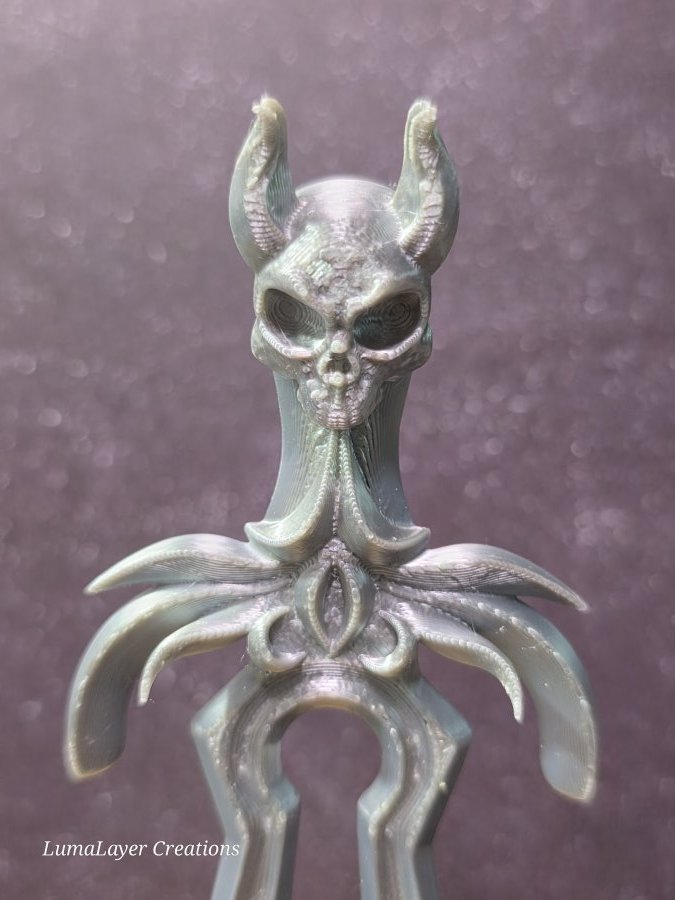
3D-printed cosplay props give you shapes that are difficult to achieve by hand, from horned headpieces with hollow interiors to layered skull ornaments with fine detail.
Material choice drives durability more than anything else.
- Rigid decorative pieces: headpieces, crowns, and display props that stay on a shelf or table
- Flexible or reinforced pieces: anything that gets bumped, sat on, or packed tightly
- Wearable structural pieces: horn headbands and masks that need to flex with movement
What most guides miss is that a prop’s weak point is rarely the print itself. It is the joint where the printed part meets a band, clip, or strap.
Ask for the wall thickness and infill of any printed piece you order. Thin, hollow prints photograph beautifully and crack the first time they hit a crowded hallway floor.
Gothic Jewelry for Cosplay: Chokers, Pendants, and Statement Pieces That Last
Gothic jewelry for cosplay should be judged on two things: how it looks in photos and how it survives a full day of wear.
Start with the pieces that frame your face, since those carry the most visual weight in close-up shots:
- Chokers: velvet, lace-up front, or braided band styles; check that the closure sits flat against the neck
- Pendants: cameo, batwing, rose, or skull motifs on a chain that matches your outfit’s metal tone
- Statement necklaces: layered chains with tassels or ornamental drops for Victorian and steampunk looks
Weight matters more than people expect. A heavy pendant pulls a thin chain out of shape over a long day, and a chunky statement necklace can shift every time you turn your head.
Custom sizing is the quiet advantage here.
DIY Gothic Cosplay Accessories: When to Make, When to Custom-Order
DIY gothic cosplay accessories make sense for simple, forgiving pieces and for anything you want to remake between events. The keyword here is custom, and most guides skip the part that actually matters: how a custom commission works from first message to finished piece.
Here is how we would decide:
| Piece type | Make it yourself | Custom-order it |
|---|---|---|
| Simple ribbon chokers | Yes | Only for exact sizing |
| Lace and trim accents | Yes | Rarely worth ordering |
| Horn headbands | Only if you have tools | Yes, for fit and finish |
| Detailed masks | No | Yes, for structure |
| Skull and bat motifs | Simple cutouts only | Yes, for fine detail |
| Full headpieces | No | Yes, every time |
The honest limit on DIY is finishing. Home tools handle flat shapes and soft materials well. They struggle with curved, hollow, or symmetrical forms, which is exactly what a horn headband or a fitted mask requires.
What a custom commission actually involves
A custom order is not a product page with a size dropdown. It is a short back-and-forth, and knowing the steps keeps the process predictable:
- Reference and concept. You send character references, screenshots, or a sketch. The maker confirms which elements are load-bearing (silhouette, motif, color) and which are negotiable (exact filigree, minor proportions).
- Measurements. For headwear, that usually means head circumference, the distance from ear to ear over the crown, and the height where the piece should sit. For chokers, neck circumference plus a comfort allowance. For masks, face width at the cheekbones and the bridge-to-chin length.
- Material and finish selection. The maker proposes a material based on wear, not just looks. A piece meant for photos can be lighter and more delicate; a piece meant for a full convention weekend needs reinforcement at stress points.
- Digital proof or mockup. Many makers share a render or a rough physical mockup before final production. This is your last cheap chance to change the design.
- Production and fit check. The finished piece ships, and you test it against your wig, makeup, and base layers before the event.
Questions worth asking before you commission
- What is the attachment method? A headpiece that clips to hair behaves differently from one that sits on an elastic band or a rigid headband. Ask which one suits your hairstyle or wig.
- Is the piece adjustable? Hidden elastic, a sliding band, or a hook-and-loop closure can absorb small sizing errors and let the piece survive a friend borrowing it.
- What is the turnaround? Most custom makers quote lead times in weeks, not days. A common pattern is two to six weeks for a single piece, longer for a full set or a complex headpiece.
- What happens if it does not fit? Ask about refits or adjustments before you pay, not after.
Where DIY still wins
DIY is not the consolation prize. It is the right call when you want to iterate, when the piece is soft and forgiving, or when you enjoy the build as part of the hobby. Ribbon chokers, lace cuffs, simple bat or skull cutouts, and fabric trim are all reasonable home projects. The line is usually structural: once a piece needs internal support, symmetry, or a precise fit against the body, custom work pays for itself in fewer remakes.
If you are commissioning a headpiece, send a photo of yourself wearing the wig you plan to use. Wig volume changes where a crown or horn band sits, and a maker who sees the wig can build the fit around it.
Cosplay Prop Care: Packing, Transport, and Convention Rules
Cosplay prop care starts before you leave the house. Most damage happens in transit and in crowded hallways, not on stage. The same is true of comfort: the pieces that fail you at a convention usually fail because of weight, heat, or a bad attachment point, not because of a bad design.
Packing and transport
Packing rules that hold up in practice:
- Wrap rigid pieces individually in soft cloth, then pack them so nothing presses on a thin section
- Keep horn headbands and masks in a rigid box rather than a soft bag
- Pack jewelry in separate pouches so chains do not tangle or scratch pendants
- Bring a small repair kit: clear adhesive, safety pins, spare elastic, and a few zip ties
For air travel, keep sculptural headpieces and masks in a carry-on if they fit. Checked baggage is where thin printed sections crack. If a piece must be checked, build a foam cradle inside a hard case so the piece cannot shift.
Convention rules and safety
Convention rules vary by venue and event, so check the specific event’s published prop and safety policy before you travel. The patterns that show up across most events:
- Weapon policy. Anything that reads as a functional weapon, even a decorative one, is usually subject to inspection, tagging, or a ban. A clearly costume accessory is treated differently from a realistic prop.
- Size limits. Many events restrict oversized props in aisles, elevators, and crowded panels. A large headpiece or staff may be fine on the show floor but not in a packed dealer hall.
- Mask policy. Masks are often required to be removable for security checks, and some venues restrict full-face coverage in certain areas.
- Sharp edges and points. Horns, spikes, and metal trim should be blunt or padded. A pointed horn that looks great in photos is a liability in a shoulder-to-shoulder crowd.
- Visibility. A mask or headpiece that blocks your peripheral vision is a safety issue in a crowded hall. Test it before you commit to wearing it all day.
All-day wear and comfort
A convention day can run eight to twelve hours, and most of that is standing, walking, and posing. Test your full outfit at home for at least an hour before the event. Walk, sit, turn your head, and raise your arms. Anything that pinches will pinch worse by hour six.
What to watch for:
- Weight. A heavy pendant pulls a thin chain out of shape. A heavy headpiece causes neck fatigue. Distribute weight across a band rather than a single point.
- Heat and ventilation. Printed and layered pieces trap heat. If a headpiece covers the scalp, plan breaks where you can remove it and cool down.
- Skin contact. Lace, metal, and painted surfaces can irritate skin over a long day. A thin barrier, a fabric liner, a strip of moleskin, or a soft band, prevents most of it.
- Attachment points. The joint where a printed piece meets a band, clip, or strap is the weak point. Check it before the event and carry a backup attachment method.
Ordering custom work two weeks before a convention is the single most common mistake we see. Build in time for a sizing question or a remake, because a rushed custom order is worse than a mass-produced backup.
Pack for the trip home, not just the trip there. A piece that survives the convention but cracks in a soft bag on the return leg is the most avoidable loss of the weekend.
How to Coordinate a Complete Gothic Cosplay Outfit
Coordinating a complete look means picking one visual anchor and building outward, not collecting every gothic piece you like. Choose the element that carries the character, then let the rest support it.
A workable structure:
- Anchor piece: the headpiece, mask, or statement necklace that defines the look
- Metal tone: pick one (silver, brass, or blackened) and hold it across jewelry and trim
- Motif family: keep to two motifs at most, such as skulls and roses, or bats and chains
- Texture layer: lace, velvet, or leather, chosen to contrast the anchor rather than match it
- Supporting accessories: choker, pendant, and small ornaments that repeat the anchor’s motif
- Wig and styling: test the wig with the headpiece on, since volume changes the fit
- Dress or outfit set: let the garment stay quieter than the accessories so the anchor reads
One strong anchor piece with three supporting accessories looks more deliberate than six competing statement pieces. Restraint is what separates a styled outfit from a costume pile.
Conclusion: Your Next Convention Look Starts with the Right Accessories
Building a convention look that holds up takes more than picking pieces you like online. It takes sizing that fits, materials that survive a weekend, and a plan for packing and repair before you leave.
At LumaLayer Creations, we make original 3D-printed gothic and cosplay accessories in our Colorado studio, including custom headpieces, horn headbands, and dark-fantasy jewelry, with made-to-measure options so a piece fits you rather than an average.
Frequently Asked Questions
What accessories work well for a gothic cosplay?
Gothic cosplay accessories include horn headbands, lace chokers with pendants, top hats, skull or bat-motif brooches, and 3D-printed props like batwing ornaments or cameo-inspired pieces. Layering these with Victorian or steampunk elements, such as braided bands or lace-up details, creates a cohesive dark aesthetic. Choose pieces that match your character’s era and silhouette, and prioritize items you can wear comfortably for several hours on the convention floor.
How do I make gothic cosplay accessories look custom?
Customization can be as simple as swapping a ribbon for a chain, adding tassels, or painting a 3D-printed piece in a unique color. For a truly custom look, order made-to-measure pieces that fit your body and character design. LumaLayer Creations offers original 3D-printed designs you can personalize with finishes or motifs. Even small changes, like replacing a standard clasp with a cameo, make accessories feel one-of-a-kind.
How can I keep gothic cosplay accessories comfortable to wear all day?
Comfort starts with weight distribution. Choose headpieces with padded bands, and use wig clips to secure horns without pinching. For jewelry, opt for lightweight materials like 3D-printed resin or hollow metal, and avoid tight chokers that restrict breathing. Test your full outfit for at least two hours before the event. Bring a small repair kit with safety pins and extra chain in case something shifts during the day.
How should I pack delicate cosplay accessories for a convention?
Wrap each piece individually in soft cloth or bubble wrap, then place them in a hard-sided case with dividers. For 3D-printed props, detach any removable parts and store them separately to prevent stress cracks. Label each compartment so you can find items quickly. If flying, pack accessories in your carry-on to avoid temperature extremes and rough handling. At the hotel, keep your case closed and away from direct sunlight.
0 Comments